

September Real Estate Market Update
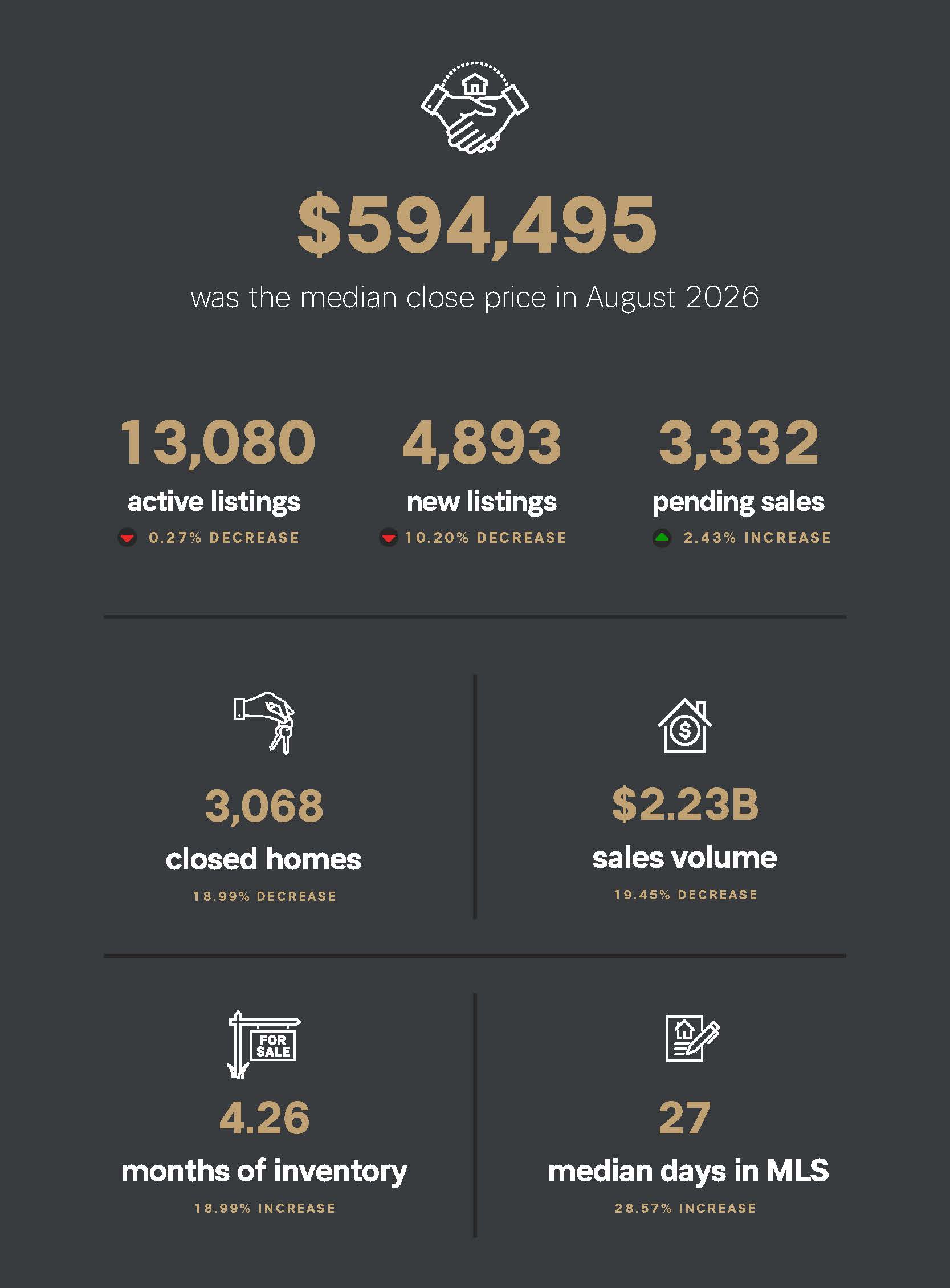
Months of inventory jumped to 4.26, up almost 19% from July. That’s inside balanced market territory for the first time in a while; four to six months is considered even ground between buyers and sellers. Median days in MLS climbed to 27, up from 21 in July, though still a bit faster than last August’s 30.
New listings dropped over 10% month over month. Active listings barely moved, down a quarter percent. Sellers aren’t rushing to list, and the ones already listed are waiting longer for a buyer to show up.
Detached and attached keep diverging. Detached inventory is down over 4% year over year while attached inventory is up nearly 10%. Attached homes are sitting a median of 45 days, compared with 24 for detached. Detached pricing held essentially flat year over year. Attached fell almost 5%. If you’re selling a condo right now, you’re not in the same market as your neighbor selling a single-family home two blocks away, even if the address makes it look that way.
Why This Rate Move Matters More Than the Last One
Earlier this year, well-qualified buyers were landing rates around 5.75%, with the national average bottoming out near 5.98%. Today those same buyers are landing closer to 6.75%, with the national average sitting near 6.98%. That’s a full point of movement, and it’s not abstract.
On a $750,000 home with 20% down, that one point difference adds roughly $390 to the monthly payment. That’s not a rounding error. That’s a real number showing up in a budget that’s already absorbing higher costs everywhere else, insurance, groceries, everything inflation touches.
We covered last month why this doesn’t push sellers to drop price the way it used to. The gap between what a seller is financed at and what a buyer has to finance at is still the widest we’ve measured in 40-plus years, and this rate move just widened it further. Sellers aren’t feeling the same pain buyers are feeling, because most of them aren’t the ones taking on the new rate.
What this means for you
Buying: Your money buys less per month right now, and that’s simply true. Some buyers are responding by shifting their price point down to match the new payment math. The instinct is understandable: the idea that if your payment went up, the seller should feel that too. They don’t, and they won’t, for the reasons we’ve been laying out for two months running. So be methodical instead. Know your real renovation costs before you factor a discount into your offer, guessing low there costs people more than the rate ever will. And in a market under this much stress, don’t chase the up and coming neighborhood hoping for a deal. Buy into strength, into the areas and the homes that hold demand even when everything else slows down.
Selling: Your home will sit, and it will sit longer than it did a few months ago. That’s going to be stressful, and we’re not going to pretend otherwise. Pricing it right and updating it fully still carries real risk in this environment, there’s no guaranteed fast sale left on the table right now. Our honest advice: only list if you have to. Sitting tight and riding out a few more mortgage payments is very likely to cost you the same, or less, than what you’d give up in price reductions trying to chase a buyer who isn’t there yet. This market runs on emotion as much as math, and patience is doing more work than negotiation right now.
For our relocation clients, this is exactly why the model keeps winning. When the right home shows up, you move on it. When it doesn’t, you wait, without the pressure of a lease clock or a rate lock forcing your hand. Timing this market perfectly isn’t something anyone can do reliably right now, so we built an approach that doesn’t require you to.
Take a breath this week if you need one. Go see the Aspens turning up in the mountains. The market will still be choppy when you get back, but it’s a good reminder that Denver’s worth all of this.

 CALL US NOW