
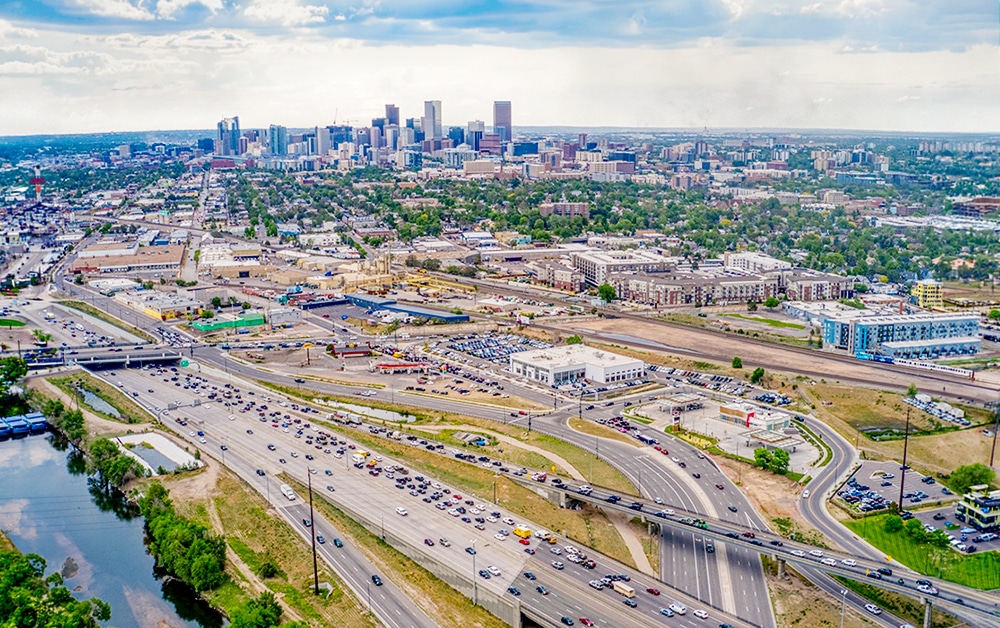
Understanding the local roadways, neighborhoods, and transportation options before you buy a home can help you find a community that fits both your lifestyle and your daily routine.
Understanding the Denver Metro Area
The Denver metropolitan area includes much more than the city itself. Many residents live in surrounding communities such as:
- Littleton
- Highlands Ranch
- Centennial
- Parker
- Castle Rock
- Lakewood
- Arvada
- Westminster
- Broomfield
- Thornton
- Erie
These communities offer different price points, school districts, amenities, and commute times. Choosing the right one often comes down to balancing your housing priorities with how much time you want to spend on the road.
Average Commute Times
Many Denver-area residents commute between 20 and 40 minutes each way.
During rush hour, however, certain routes can take considerably longer.
Typical commute estimates include:
| From | To Downtown Denver |
| Lakewood | 15–25 minutes |
| Littleton | 20–35 minutes |
| Arvada | 20–35 minutes |
| Highlands Ranch | 25–45 minutes |
| Centennial | 20–40 minutes |
| Parker | 30–50 minutes |
| Castle Rock | 35–60 minutes |
| Erie | 35–55 minutes |
These estimates vary based on traffic, weather, accidents, and construction.
The Highways You’ll Get to Know
Most commuters rely on a handful of major highways:
I-25
Denver’s primary north-south corridor connects Fort Collins, runs through Denver, and extends toward Colorado Springs. It’s one of the busiest highways in the state. One of the biggest traffic bottlenecks in Denver is I-25 between Speer Boulevard and University Boulevard. While this stretch can take just 7–8 minutes without traffic, it often expands to 30 minutes or more during rush hour. If possible, avoid routes that require traveling through this corridor at peak times. Direction also matters—commuting northbound in the morning and southbound in the evening is generally easier, while the opposite direction is typically much more congested. This is especially common for professionals who live in LoDo, RiNo, or LoHi and commute to the Denver Tech Center.
I-70
Running east-west, I-70 is the main route to the mountains and Denver International Airport. Weekend ski traffic can create significant delays during the winter months.
C-470 / E-470
These beltways connect many southern and eastern suburbs. E-470 is a toll road but often provides a faster alternative to I-25.
US-36
Connecting Denver and Boulder, this corridor is popular with commuters working in technology, aerospace, and research industries.
US-6 / 6th Avenue Parkway
Connecting Denver, Lakewood, and Golden. This highway is popular with commuters who come from the foothills, the mountains, or Golden to work in Denver, or those who work in the mountains and live in Denver. The traffic is heavier coming from the east to the west, and is easier going west.
Commuting to the Denver Tech Center (DTC)
Many professionals relocating to Colorado work in the Denver Tech Center rather than downtown.
If your office is in DTC, communities such as:
- Centennial
- Greenwood Village
- Lone Tree
- Highlands Ranch
- Parker
- Park Hill
- Congress
- Hilltop
Living in these areas can significantly reduce your commute while offering excellent neighborhoods, parks, and highly rated schools. If you want to live in Park Hill, Congress, or Hilltop but work in the DTC. The secret is to get off Colorado and take Monaco all the way. But it’s a long commute because of traffic, so plan on 45 minutes, depending on how far into the DTC you need to go.
Working Downtown?
If your office is downtown, neighborhoods like:
- LoHi
- Sloan’s Lake
- Berkeley
- Washington Park
- Central Park
- Lakewood
- Littleton
Living in one of these neighborhoods can provide a balance between commute time and neighborhood amenities.
A great app to use is TravelTime to see how long your commute will be based on your home and work locations. Check out TravelTime »
Public Transportation Options
Denver’s public transportation system includes light rail, commuter rail, and bus routes that connect many suburban communities to downtown.
Some buyers intentionally choose homes near light rail stations to reduce driving, save on parking costs, and avoid rush-hour traffic.
While many residents still drive, public transit can be an excellent option depending on where you live and work.
Hybrid and Remote Work Are Changing Home Searches
One trend we’ve seen is buyers who only commute two or three days each week.
Instead of prioritizing the shortest possible commute, many choose larger homes, more outdoor space, or neighborhoods with better recreational amenities a little farther from the city.
If you’re only driving a few days each week, living an extra 15 minutes away may be well worth the tradeoff.
Tips for Choosing the Right Location
Before purchasing a home, consider:
- Drive your potential commute during rush hour if possible.
- Think about where you’ll spend weekends—not just weekdays.
- Consider future job flexibility and career growth.
- Research planned road improvements and new developments.
- Don’t forget airport access if you travel frequently.
A beautiful home isn’t always the right fit if it adds an hour to your daily commute.
Let RealGroup Help You Find the Right Balance
Every relocation is different.
Some buyers want to be within 20 minutes of downtown, while others prioritize mountain access, larger lots, or top-rated schools. The key is finding a neighborhood that complements both your career and your lifestyle.
At RealGroup, we help out-of-state buyers navigate the Denver metro area every day. From understanding commute patterns to comparing neighborhoods and finding the right home, we’ll help you make an informed decision before you move.
Planning a move to Denver? Contact RealGroup today to explore neighborhoods, compare commute options, and find a home that fits your lifestyle from day one.
 CALL US NOW